Sortowanie
Źródło opisu
Legimi
(605)
Forma i typ
E-booki
(605)
Autor
Blake Sheba
(28)
Carnegie Dale
(26)
William Shakespeare
(20)
Dickens Charles
(19)
Poe Edgar Allan
(13)
Doyle Arthur Conan
(12)
Wells H. G
(12)
Balzac Honore de
(9)
London Jack
(9)
Lovecraft H. P
(9)
Burroughs Edgar Rice
(8)
Jules Verne
(8)
Baum L. Frank
(7)
James Henry
(7)
Twain Mark
(7)
Wilde Oscar
(7)
Chesterton G. K
(6)
Collins Wilkie
(6)
Dumas Alexandre
(6)
Edward Gibbon
(6)
Hardy Thomas
(6)
Jane Austen
(6)
Bram Stoker
(5)
Burnett Frances Hodgson
(5)
Fitzgerald F. Scott
(5)
Fyodor Dostoyevsky
(5)
Haggard H. Rider
(5)
Kafka Franz
(5)
Leo Tolstoy
(5)
Rudyard Kipling
(5)
Stevenson Robert Louis
(5)
Verne Jules
(5)
Wodehouse P. G
(5)
Alighieri Dante
(4)
Anonymous
(4)
Blackwood Algernon
(4)
Maugham W. Somerset
(4)
Alcott Louisa May
(3)
Daniel Defoe
(3)
Forster E. M
(3)
George Eliot
(3)
Harrison Harry
(3)
Lincoln Abraham
(3)
Nesbit Edith
(3)
Nietzsche Friedrich
(3)
Stratton-Porter Gene
(3)
Thoreau Henry David
(3)
Wharton Edith
(3)
Allen James Lane
(2)
Ambrose Bierce
(2)
Arthur T. S
(2)
Bangs John Kendrick
(2)
Carnegie Andrew
(2)
Charles Darwin
(2)
Churchill Winston
(2)
Dick Philip K
(2)
Fox John
(2)
French John
(2)
Gaskell Elizabeth
(2)
Harte Bret
(2)
Hawthorne Nathaniel
(2)
Herodotus
(2)
Hope Anthony
(2)
Hugo Victor
(2)
James Joyce
(2)
Jerome Jerome K
(2)
Jonathan Swift
(2)
Joseph Conrad
(2)
Lewis Carroll
(2)
Lewis Sinclair
(2)
Lowell James Russell
(2)
Mason A. E. W
(2)
Montgomery Lucy Maud
(2)
O'Donnell Elliott
(2)
Plato
(2)
Rinehart Mary Roberts
(2)
Sabatini Rafael
(2)
Shelley Mary
(2)
Sinclair Upton
(2)
Thomas Paine
(2)
Toqueville Alexis de
(2)
Tranquillus C. Suetonious
(2)
Voltaire
(2)
Vonnegut Kurt
(2)
Wallace Lew
(2)
Weinbaum Stanley
(2)
Abbott Edwin A
(1)
Adam Smith
(1)
Aesop
(1)
Andersen Hans Christian
(1)
Anderson Sherwood
(1)
Aristotle
(1)
Asimov Isaac
(1)
Astor John Jacob
(1)
Atherton Gertrude
(1)
Aurelius Marcus
(1)
Barnum P. T
(1)
Barrett Frank
(1)
Barrie J. M
(1)
Beers Clifford Whittingham
(1)
Rok wydania
2020 - 2026
(3)
2010 - 2019
(602)
Kraj wydania
Polska
(605)
Język
polski
(605)
605 wyników Filtruj
E-book
W koszyku
Flatland is a satirical novella by the English schoolmaster Edwin Abbott Abbott. Written pseudonymously by "A Square", the book used the fictional two-dimensional world of Flatland to comment on the hierarchy of Victorian culture, but the novella's more enduring contribution is its examination of dimensions. Several films have been made from the story, including the feature film Flatland (2007). Other efforts have been short or experimental films, including one narrated by Dudley Moore and the short films Flatland: The Movie (2007) and Flatland 2: Sphereland (2012). The story describes a two-dimensional world occupied by geometric figures, whereof women are simple line-segments, while men are polygons with various numbers of sides. The narrator is a square named A Square, a member of the caste of gentlemen and professionals, who guides the readers through some of the implications of life in two dimensions. The first half of the story goes through the practicalities of existing in a two-dimensional universe as well as a history leading up to the year 1999 on the eve of the 3rd Millennium.
Ta pozycja jest dostępna przez Internet. Rozwiń informację, by zobaczyć szczegóły.
Dostęp do treści elektronicznej wymaga posiadania kodu dostępu, który można odebrać w bibliotece.
E-book
W koszyku
Forma i typ
The Wealth of Nations is the magnum opus of the Scottish economist and moral philosopher Adam Smith. First published in 1776, the book offers one of the world's first collected descriptions of what builds nations' wealth, and is today a fundamental work in classical economics. By reflecting upon the economics at the beginning of the Industrial Revolution, the book touches upon such broad topics as the division of labour, productivity, and free markets. An important theme that persists throughout the work is the idea that the economic system is automatic, and, when left with substantial freedom, able to regulate itself. This is often referred to as the "invisible hand." The ability to self-regulate and to ensure maximum efficiency, however, is limited by externalities, monopolies, tax preferences, lobbying groups, and other "privileges" extended to certain members of the economy at the expense of others. The Wealth of Nations was published 9 March 1776, during the Scottish Enlightenment and the Scottish Agricultural Revolution. It influenced a number of authors and economists, as well as governments and organizations. For example, Alexander Hamilton was influenced in part by The Wealth of Nations to write his Report on Manufactures, in which he argued against many of Smith's policies. Interestingly, Hamilton based much of this report on the ideas of Jean-Baptiste Colbert, and it was, in part, Colbert's ideas that Smith responded to with The Wealth of Nations. The Wealth of Nations was the product of seventeen years of notes, an observation of conversation among economists of the time concerning economic and societal conditions during the beginning of the Industrial Revolution, and took Smith ten years to produce.
Ta pozycja jest dostępna przez Internet. Rozwiń informację, by zobaczyć szczegóły.
Dostęp do treści elektronicznej wymaga posiadania kodu dostępu, który można odebrać w bibliotece.
E-book
W koszyku
Forma i typ
Aesop's Fables is a collection of fables credited to Aesop, a slave and storyteller believed to have lived in ancient Greece between 620 and 564 BCE. The fables originally belonged to the oral tradition and were not collected for some three centuries after Aesop's death. By that time a variety of other stories, jokes and proverbs were being ascribed to him, although some of that material was from sources earlier than him or came from beyond the Greek cultural sphere. The process of inclusion has continued until the present, with some of the fables unrecorded before the later Middle Ages and others arriving from outside Europe. The process is continuous and new stories are still being added to the Aesop corpus, even when they are demonstrably more recent work and sometimes from known authors.
Ta pozycja jest dostępna przez Internet. Rozwiń informację, by zobaczyć szczegóły.
Dostęp do treści elektronicznej wymaga posiadania kodu dostępu, który można odebrać w bibliotece.
E-book
W koszyku
Among green New England hills stood an ancient house, many-gabled, mossy-roofed, and quaintly built, but picturesque and pleasant to the eye; for a brook ran babbling through the orchard that encompassed it about, a garden-plat stretched upward to the whispering birches on the slope, and patriarchal elms stood sentinel upon the lawn, as they had stood almost a century ago, when the Revoiution rolled that way and found them young. One summer morning, when the air was full of country sounds, of mowers in the meadow, black-birds by the brook, and the low of kine upon the hill-side, the old house wore its cheeriest aspect, and a certain humble history began.
Ta pozycja jest dostępna przez Internet. Rozwiń informację, by zobaczyć szczegóły.
Dostęp do treści elektronicznej wymaga posiadania kodu dostępu, który można odebrać w bibliotece.
E-book
W koszyku
Little Men is a novel by American author Louisa May Alcott. The novel reprises characters from Little Women and is considered by some the second book in an unofficial Little Women trilogy, which is completed with Alcott's 1886 novel Jo's Boys, and How They Turned Out: A Sequel to "Little Men". It tells the story of Jo Bhaer and the children at Plumfield Estate School. It was inspired by the death of Alcott's brother-in-law, which reveals itself in one of the last chapters, when a beloved character from Little Women passes away. The book recounts six months in the life of the students at Plumfield, a school run by Professor Friedrich and Mrs. Josephine Bhaer. The idea of the school is first suggested at the very end of part two of Little Women, when Jo inherited the estate from her Aunt March. The story begins with the arrival of Nat Blake, a shy young orphan who used to earn a living playing the violin. We are introduced to the majority of the characters through his eyes. There are ten boys at the school already; Nat, and later his friend Dan, join them, and soon after Nan arrives as companion for Daisy, the only girl. Jo's sons Rob and Teddy are younger than the others and are not counted among the pupils, nor are the two girls, Daisy and Nancy. The school is not run on conventional lines. All the children have their own gardens and their own pets, and are encouraged to experiment with running businesses. Pillow fights are permitted on Saturdays, subject to a time limit. Children are treated as individuals, with a strong emphasis on gently molding their characters. Daisy Brooke, Meg's daughter, is at the school with her twin brother Demi, but is somewhat isolated with no other girls her age, until Nan's arrival. Nan is even more of a tomboy than Jo was as a child, while Daisy is interested mainly in dolls and in her own mini kitchen, purchased by Jo's brother-in-law, Laurie.
Ta pozycja jest dostępna przez Internet. Rozwiń informację, by zobaczyć szczegóły.
Dostęp do treści elektronicznej wymaga posiadania kodu dostępu, który można odebrać w bibliotece.
E-book
W koszyku
Little Women is a novel by American author Louisa May Alcott. The novel follows the lives of four sisters.Meg, Jo, Beth, and Amy March.detailing their passage from childhood to womanhood, and is loosely based on the author and her three sisters. Little Women was an immediate commercial and critical success, and readers demanded to know more about the characters. Alcott quickly completed a second volume (entitled Good Wives in the United Kingdom, although this name originated from the publisher and not from Alcott). It was also successful. The two volumes were issued in 1880 in a single work entitled Little Women. Alcott wrote two sequels to her popular work, both of which also featured the March sisters: Little Men (1871) and Jo's Boys (1886). Although Little Women was a novel for girls, it differed notably from the current writings for children, especially girls. The novel addressed three major themes: "domesticity, work, and true love, all of them interdependent and each necessary to the achievement of its heroine's individual identity." Little Women "has been read as a romance or as a quest, or both. It has been read as a family drama that validates virtue over wealth", but also "as a means of escaping that life by women who knew its gender constraints only too well". According to Sarah Elbert, Alcott created a new form of literature, one that took elements from Romantic children's fiction and combined it with others from sentimental novels, resulting in a totally new format. Elbert argued that within Little Women can be found the first vision of the "All-American girl" and that her multiple aspects are embodied in the differing March sisters.
Ta pozycja jest dostępna przez Internet. Rozwiń informację, by zobaczyć szczegóły.
Dostęp do treści elektronicznej wymaga posiadania kodu dostępu, który można odebrać w bibliotece.
E-book
W koszyku
Inferno is the first part of Dante Alighieri's 14th-century epic poem Divine Comedy. It is followed by Purgatory and Paradise. The Inferno tells the journey of Dante through Hell, guided by the ancient Roman poet Virgil. In the poem, Hell is depicted as nine concentric circles of suffering located within the Earth; it is the "realm ... of those who have rejected spiritual values by yielding to bestial appetites or violence, or by perverting their human intellect to fraud or malice against their fellowmen." As an allegory, the Divine Comedy represents the journey of the soul toward God, with the Inferno describing the recognition and rejection of sin.
Ta pozycja jest dostępna przez Internet. Rozwiń informację, by zobaczyć szczegóły.
Dostęp do treści elektronicznej wymaga posiadania kodu dostępu, który można odebrać w bibliotece.
E-book
W koszyku
Paradise is the third and final part of Dante's Divine Comedy, following the Inferno and the Purgatory. It is an allegory telling of Dante's journey through Heaven, guided by Beatrice, who symbolises theology. In the poem, Paradise is depicted as a series of concentric spheres surrounding the Earth, consisting of the Moon, Mercury, Venus, the Sun, Mars, Jupiter, Saturn, the Fixed Stars, the Primum Mobile and finally, the Empyrean. It was written in the early 14th century. Allegorically, the poem represents the soul's ascent to God. The Paradise begins at the top of Mount Purgatory, called the Earthly Paradise (i.e. the Garden of Eden), at noon on Wednesday, March 30 (or April 13), 1300, following Easter Sunday. Dante's journey through Paradise takes approximately twenty-four hours, which indicates that the entire journey of the Divine Comedy has taken one week, Thursday evening (Inferno I and II) to Thursday evening. After ascending through the sphere of fire believed to exist in the earth's upper atmosphere (Canto I), Beatrice guides Dante through the nine celestial spheres of Heaven, to the Empyrean, which is the abode of God. The nine spheres are concentric, as in the standard medieval geocentric model of cosmology, which was derived from Ptolemy. The Empyrean is non-material. As with his Purgatory, the structure of Dante's Heaven is therefore of the form 9+1=10, with one of the ten regions different in nature from the other nine. During the course of his journey, Dante meets and converses with several blessed souls. He is careful to say that these all actually live in bliss with God in the Empyrean: "But all those souls grace the Empyrean; and each of them has gentle life though some sense the Eternal Spirit more, some less." However, for Dante's benefit (and the benefit of his readers), he is "as a sign" shown various souls in planetary and stellar spheres that have some appropriate connotation.
Ta pozycja jest dostępna przez Internet. Rozwiń informację, by zobaczyć szczegóły.
Dostęp do treści elektronicznej wymaga posiadania kodu dostępu, który można odebrać w bibliotece.
E-book
W koszyku
In Roman Catholic theology, Purgatory is an intermediate state after physical death in which some of those ultimately destined for heaven must first "undergo purification, so as to achieve the holiness necessary to enter the joy of heaven," holding that "certain offenses can be forgiven in this age, but certain others in the age to come." And that entrance into Heaven requires the "remission before God of the temporal punishment due to [venial] sins whose guilt has already been forgiven," for which indulgences may be given which remove "either part or all of the temporal punishment due to sin," such as an "unhealthy attachment" to sin. Only those who die in the state of grace but have not yet fulfilled the temporal punishment due to their sin can be in Purgatory, and therefore no one in Purgatory will remain forever in that state nor go to hell. The notion of Purgatory is associated particularly with the Latin Rite of the Catholic Church (in the Eastern sui juris churches or rites it is a doctrine, though it is not often called "Purgatory", but the "final purification" or the "final theosis"); Anglicans of the Anglo-Catholic tradition generally also hold to the belief. Eastern Orthodox Churches believe in the possibility of a change of situation for the souls of the dead through the prayers of the living and the offering of the Divine Liturgy, and many Orthodox, especially among ascetics, hope and pray for a general apocatastasis. Judaism also believes in the possibility of after-death purification and may even use the word "purgatory" to present its understanding of the meaning of Gehenna. However, the concept of soul "purification" may be explicitly denied in these other faith traditions. The word Purgatory has come to refer also to a wide range of historical and modern conceptions of postmortem suffering short of everlasting damnation, and is used, in a non-specific sense, to mean any place or condition of suffering or torment, especially one that is temporary.
Ta pozycja jest dostępna przez Internet. Rozwiń informację, by zobaczyć szczegóły.
Dostęp do treści elektronicznej wymaga posiadania kodu dostępu, który można odebrać w bibliotece.
E-book
W koszyku
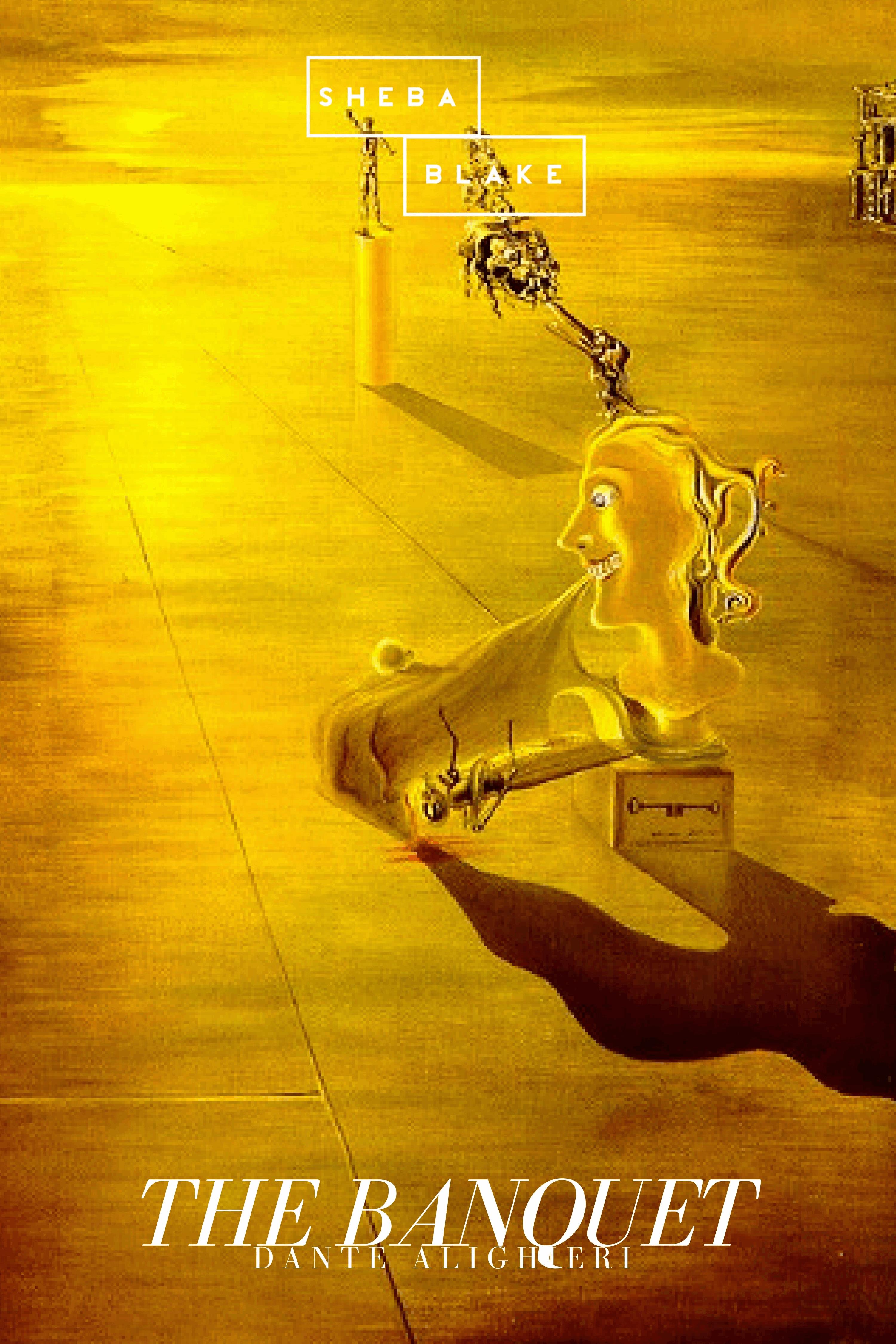
The Banquet is a work written by Dante Alighieri roughly between 1304 and 1307. This unfinished work of Dante consists of four trattati, or "books": a prefatory one, plus three books that each include a canzone (long lyrical poem) and a prose allegorical interpretation or commentary of the poem that goes off in multiple thematic directions. The Banquet is a major stage of development for Dante, very different from the visionary world of the Vita nuova (although like the earlier work it too is a medium for the author's evolving sense of artistic vocation and philosophical-spiritual quest). This difference is reflected in how the two works use the prosimetrum format: in the Vita Nova there is a complex interrelation and intertwining between the prose and the poetry, while in the Banquet large blocks of prose have an autonomous existence apart from the poems; the content of the poetry is not amplified or edited in the prose so much as commented upon prosaically, to serve as points of departure for the various subjects that the Banquet discusses. Dante himself tells us that the prose of the Banquet is "temperate and virile," in contrast to the "fervid and passionate" prose of the Vita Nova; and that while the approach to this in the work of his youth was "like dreaming" the Banquet approaches it subjects soberly and wide awake, often modeling its style on Scholastic authors. The Banquet is a kind of vernacular encyclopedia of the knowledge of Dante's time; it touches on many areas of learning, not only philosophy but also politics, linguistics, science, and history. The treatise begins with the prefatory book, or proem, which explains why a book like the Banquet is needed and why Dante is writing it in the vernacular instead of Latin. It is one of Dante's early defenses of the vernacular, expressed in greater detail in his (slightly earlier) linguistic treatise De vulgari eloquentia (On Eloquence in the Vernacular).
Ta pozycja jest dostępna przez Internet. Rozwiń informację, by zobaczyć szczegóły.
Dostęp do treści elektronicznej wymaga posiadania kodu dostępu, który można odebrać w bibliotece.
E-book
W koszyku
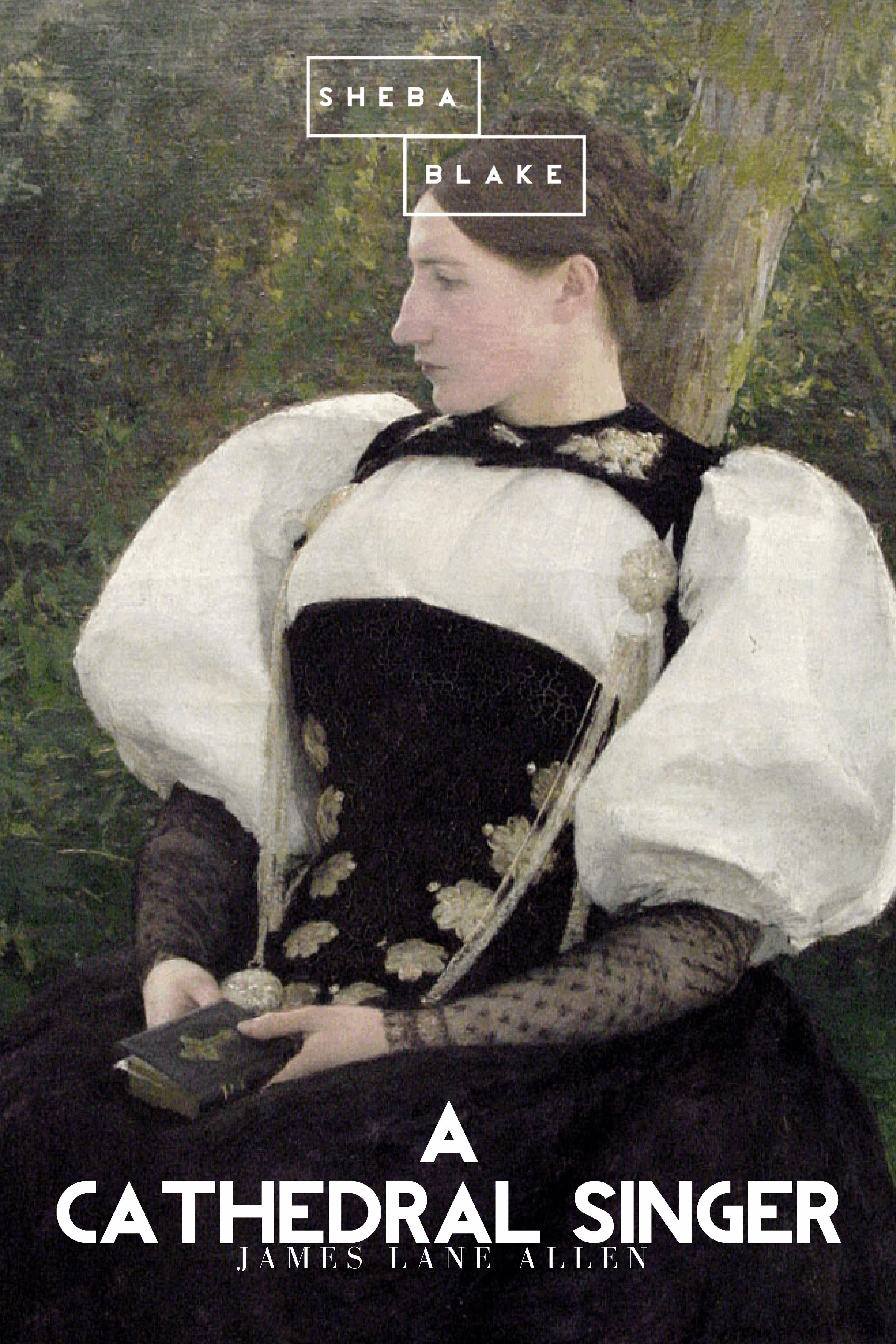
A Cathedral Singer is a fictional novel written by James Lane Allen. This uplifting novel penned by prominent Kentucky novelist James Lane Allen reminds readers that the most beautiful things in art and in life are often found in the most unexpected places. Young Ashby Truesdale has been blessed with a singing voice of remarkable purity and earnestness, but his family is mired in unspeakable poverty. Will he be able to overcome this hindrance to bring his creative gift to the world? James Lane Allen (December 21, 1849 – February 18, 1925) was an American novelist and short story writer whose work, including the novel A Kentucky Cardinal, often depicted the culture and dialects of his native Kentucky. His work is characteristic of the late-19th century local color era, when writers sought to capture the vernacular in their fiction. Allen has been described as "Kentucky's first important novelist." James Lane Allen was born near Lexington, Kentucky to Richard and Helen Jane (Foster) Allen on December 21, 1849. Allen, the youngest child in the family, had four sisters Lydia, May, Sally, and Annie, and two brothers, John and Henry. Allen lived at the Scarlet Gate estate in Lexington in the late 1800s until age 22 years. Allen spent his youth in Lexington during the Antebellum era, the American Civil War, and the Reconstruction periods. His childhood experience heavily influenced his writing. He described living at Scarlet Gate in the introduction to A Kentucky Cardinal. In 1893 Allen moved to New York City, where he lived until his death. He was a contributor to Harper's Magazine, The Atlantic Monthly, and other popular magazines of the time. His novels include The Choir Invisible, which was a very popular best seller in 1897.
Ta pozycja jest dostępna przez Internet. Rozwiń informację, by zobaczyć szczegóły.
Dostęp do treści elektronicznej wymaga posiadania kodu dostępu, który można odebrać w bibliotece.
E-book
W koszyku
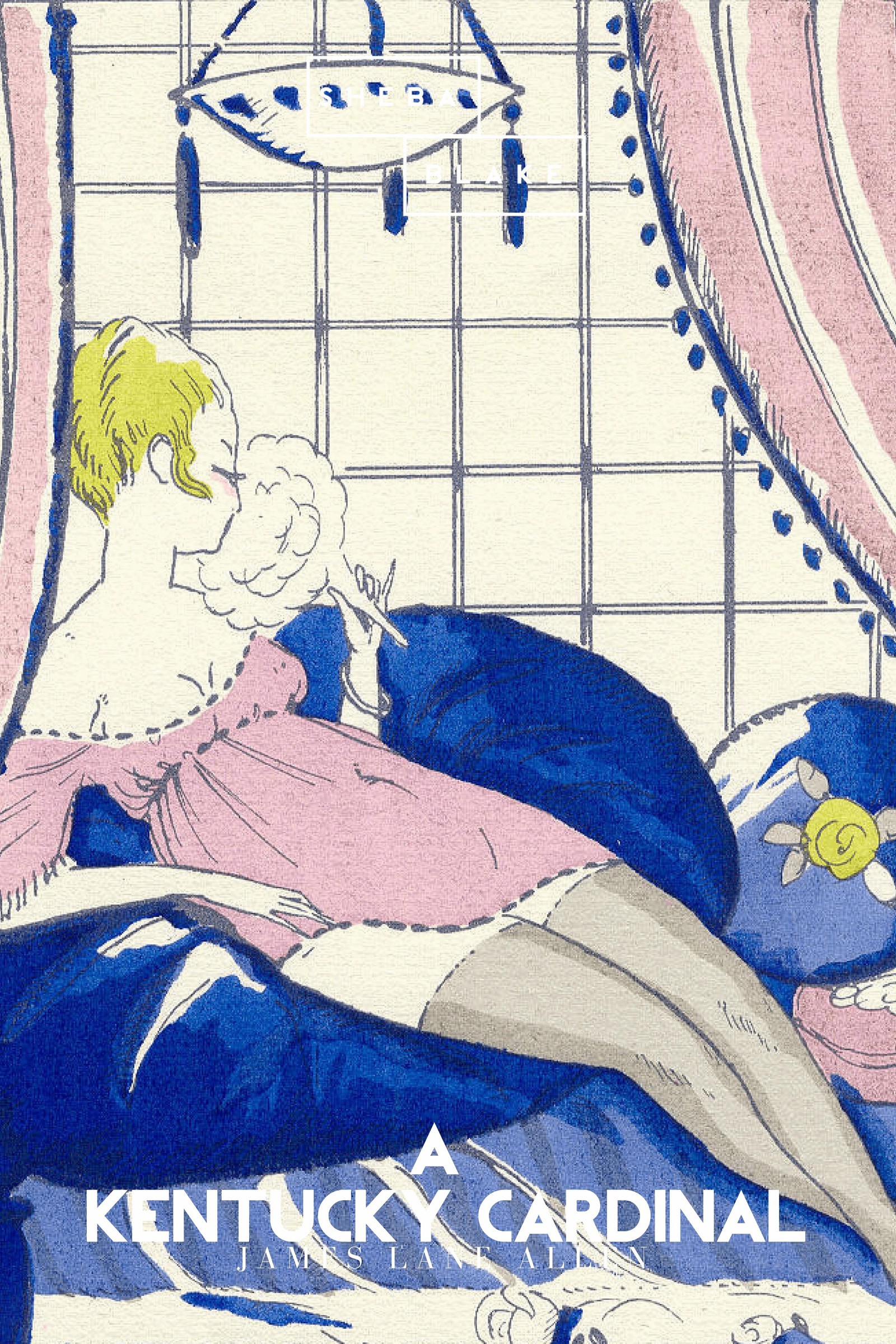
A Kentucky Cardinal is American writer James Lane Allen's third novel. It was published in 1894 as the first of the A Kentucky Cardinal series. James Lane Allen (December 21, 1849 – February 18, 1925) was an American novelist and short story writer whose work, including the novel A Kentucky Cardinal, often depicted the culture and dialects of his native Kentucky. His work is characteristic of the late-19th century local color era, when writers sought to capture the vernacular in their fiction. Allen has been described as "Kentucky's first important novelist." In 1893 Allen moved to New York City, where he lived until his death. He was a contributor to Harper's Magazine, The Atlantic Monthly, and other popular magazines of the time. His novels include The Choir Invisible, which was a very popular best seller in 1897. Allen is buried in Lexington Cemetery. At the northern edge of Gratz Park in Lexington is the "Fountain of Youth", built in memory of Allen using proceeds willed to the city by him. James Lane Allen School, an elementary school off Alexandria Drive in Lexington, Kentucky is named in his honor.
Ta pozycja jest dostępna przez Internet. Rozwiń informację, by zobaczyć szczegóły.
Dostęp do treści elektronicznej wymaga posiadania kodu dostępu, który można odebrać w bibliotece.
E-book
W koszyku
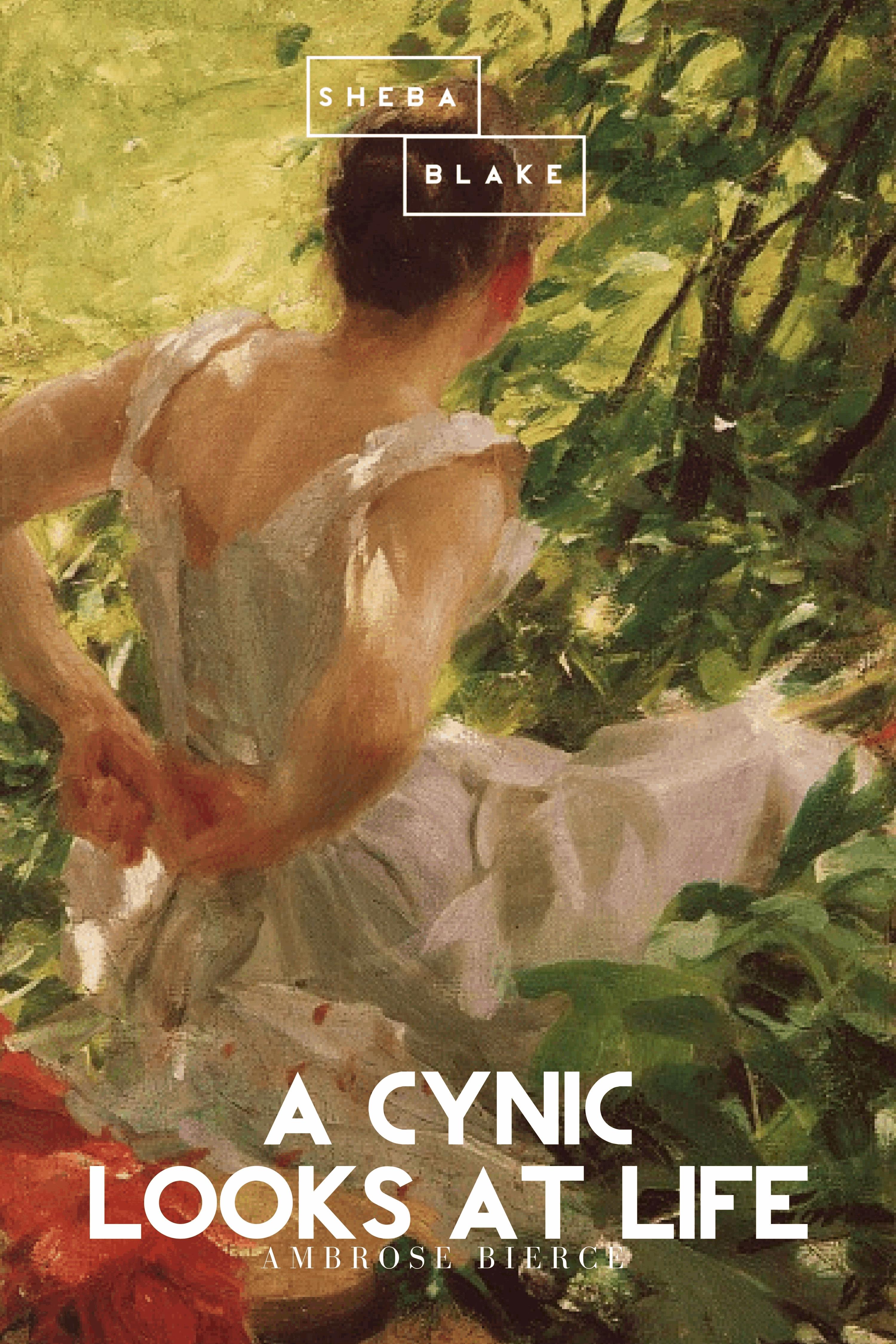
A Cynic Looks at Life is an essay written by Ambrose Bierce. Misanthropes, grumps, and the hopelessly jaded will relish every ruthlessly witty word of Ambrose Bierce's essay collection A Cynic Looks at Life. Bierce unleashes his jaundiced eye and incisive insight on a number of topics that are still as resonant as they were at the time of the book's 1912 publication. Ambrose Bierce (June 24, 1842 – 1914) was an American Civil War soldier, wit, and writer. Bierce's book The Devil's Dictionary was named as one of "The 100 Greatest Masterpieces of American Literature" by the American Revolution Bicentennial Administration. His story An Occurrence at Owl Creek Bridge has been described as "one of the most famous and frequently anthologized stories in American literature"; and his book Tales of Soldiers and Civilians (also published as In the Midst of Life) was named by the Grolier Club as one of the 100 most influential American books printed before 1900. A prolific and versatile writer, Bierce was regarded as one of the most influential journalists in the United States. For his horror writing, Michael Dirda ranked him alongside Edgar Allan Poe and H.P. Lovecraft." as a pioneering writer of realist fiction. His war stories influenced Stephen Crane, Ernest Hemingway, and others, and he was considered an influential and feared literary critic. In recent decades Bierce has gained wider respect as a fabulist and for his poetry. In December 1913, Bierce traveled to Chihuahua, Mexico, to gain first-hand experience of the Mexican Revolution. He disappeared, and was rumored to be traveling with rebel troops. He was never seen again.
Ta pozycja jest dostępna przez Internet. Rozwiń informację, by zobaczyć szczegóły.
Dostęp do treści elektronicznej wymaga posiadania kodu dostępu, który można odebrać w bibliotece.
E-book
W koszyku
Two short stories from the American Civil War by Ambrose Bierce. The first story is about a brave soldier who follows orders and risks his life without question. The second is about a soldier who falls asleep on guard duty. A mistake punishable by death in Civil War times.
Ta pozycja jest dostępna przez Internet. Rozwiń informację, by zobaczyć szczegóły.
Dostęp do treści elektronicznej wymaga posiadania kodu dostępu, który można odebrać w bibliotece.
E-book
W koszyku
Hans Christian Andersen's Fairy Tales are like exquisite jewels, drawing from us gasps of recognition and delight. Andersen created intriguing and unique characters -- a tin soldier with only one leg but a big heart, a beetle nestled deep in a horse's mane but harboring high aspirations. Each one of us at some time, has been touched by one of Andersen's Fairy Tales. Here you'll find his classic tales such as: "The Mermaid, Thumbelina, The Steadfast Tin Soldier, "and "The Ugly Duckling," 38 of your favorite tales in all. This deluxe Children's Classic edition is produced with high-quality, leatherlike binding with gold stamping, full-color covers, colored endpapers with a book nameplate. Some of the other titles in this series include: Anne of Green Gables, Black Beauty, Heidi, King Arthur and His Knights and The Secret Garden. Hans Christian Andersen often referred to in Scandinavia as H. C. Andersen; (2 April 1805 - 4 August 1875) was a Danish author. Although a prolific writer of plays, travelogues, novels, and poems, Andersen is best remembered for his fairy tales. Andersen's popularity is not limited to children; his stories, called eventyr in Danish, express themes that transcend age and nationality. Andersen's fairy tales, which have been translated into more than 125 languages, have become culturally embedded in the West's collective consciousness, readily accessible to children, but presenting lessons of virtue and resilience in the face of adversity for mature readers as well. Some of his most famous fairy tales include "The Emperor's New Clothes", "The Little Mermaid", "The Nightingale", "The Snow Queen", "The Ugly Duckling", "Thumbelina" and many more. His stories have inspired ballets, animated and live-action films and plays.
Ta pozycja jest dostępna przez Internet. Rozwiń informację, by zobaczyć szczegóły.
Dostęp do treści elektronicznej wymaga posiadania kodu dostępu, który można odebrać w bibliotece.
E-book
W koszyku
Winesburg, Ohio is a 1919 short story cycle by the American author Sherwood Anderson. The work is structured around the life of protagonist George Willard, from the time he was a child to his growing independence and ultimate abandonment of Winesburg as a young man. It is set in the fictional town of Winesburg, Ohio (not to be confused with the actual Winesburg), which is based loosely on the author's childhood memories of Clyde, Ohio. Mostly written from late 1915 to early 1916, with a few stories completed closer to publication, they were "...conceived as complementary parts of a whole, centered in the background of a single community." The book consists of twenty-two stories, with the first story, "The Book of the Grotesque", serving as an introduction. Each of the stories shares a specific character's past and present struggle to overcome the loneliness and isolation that seems to permeate the town. Stylistically, because of its emphasis on the psychological insights of characters over plot, and plain-spoken prose, Winesburg, Ohio is known as one of the earliest works of Modernist literature. Winesburg, Ohio was received well by critics despite some reservations about its moral tone and unconventional storytelling. Though its reputation waned in the 1930s, it has since rebounded and is now considered one of the most influential portraits of pre-industrial small-town life in the United States. In 1998, the Modern Library ranked Winesburg, Ohio 24th on its list of the 100 best English-language novels of the 20th century.
Ta pozycja jest dostępna przez Internet. Rozwiń informację, by zobaczyć szczegóły.
Dostęp do treści elektronicznej wymaga posiadania kodu dostępu, który można odebrać w bibliotece.
E-book
W koszyku
Beowulf / Anonymous. - [miejsce nieznane] : Sheba Blake Publishing : Legimi, 2017.
Forma i typ
Beowulf is an Old English epic poem consisting of 3182 alliterative lines. The poem is set in Scandinavia. Beowulf, a hero of the Geats, comes to the aid of Hrothgar, the king of the Danes, whose mead hall in Heorot has been under attack by a monster known as Grendel. After Beowulf slays him, Grendel's mother attacks the hall and is then also defeated. Victorious, Beowulf goes home to Geatland (Götaland in modern Sweden) and later becomes king of the Geats. After a period of fifty years has passed, Beowulf defeats a dragon, but is fatally wounded in the battle. After his death, his attendants cremate his body and erect a tower on a headland in his memory. The main protagonist Beowulf, a hero of the Geats, comes to the aid of Hrothgar, king of the Danes, whose great hall, Heorot, is plagued by the monster Grendel. Beowulf kills Grendel with his bare hands and Grendel's mother with a giant's sword that he found in her lair. Later in his life, Beowulf becomes king of the Geats, and finds his realm terrorized by a dragon, some of whose treasure had been stolen from his hoard in a burial mound. He attacks the dragon with the help of his thegns or servants, but they do not succeed. Beowulf decides to follow the dragon to its lair at Earnanæs, but only his young Swedish relative Wiglaf, whose name means "remnant of valour",[a] dares to join him. Beowulf finally slays the dragon, but is mortally wounded in the struggle. He is cremated and a burial mound by the sea is erected in his honor. Beowulf is considered an epic poem in that the main character is a hero who travels great distances to prove his strength at impossible odds against supernatural demons and beasts.
Ta pozycja jest dostępna przez Internet. Rozwiń informację, by zobaczyć szczegóły.
Dostęp do treści elektronicznej wymaga posiadania kodu dostępu, który można odebrać w bibliotece.
E-book
W koszyku
Forma i typ
Cinderella is a folk tale embodying a myth-element of unjust oppression/triumphant reward. Thousands of variants are known throughout the world. The title character is a young woman living in unfortunate circumstances, that are suddenly changed to remarkable fortune. The oldest documented version comes from China, and the oldest European version from Italy. The most popular version was first published by Charles Perrault in Histoires ou contes du temps passé in 1697, and later by the Brothers Grimm in their folk tale collection Grimms' Fairy Tales. Although the story's title and main character's name change in different languages, in English-language folklore "Cinderella" is the archetypal name. The word "Cinderella" has, by analogy, come to mean one whose attributes were unrecognized, or one who unexpectedly achieves recognition or success after a period of obscurity and neglect. The still-popular story of "Cinderella" continues to influence popular culture internationally, lending plot elements, allusions, and tropes to a wide variety of media. The Aarne-Thompson system classifies Cinderella as "the persecuted heroine". The story of Rhodopis, about a Greek slave girl who marries the king of Egypt, is considered the earliest known variant of the "Cinderella" story (published 7 BC), and many variants are known throughout the world.
Ta pozycja jest dostępna przez Internet. Rozwiń informację, by zobaczyć szczegóły.
Dostęp do treści elektronicznej wymaga posiadania kodu dostępu, który można odebrać w bibliotece.
E-book
W koszyku
Forma i typ
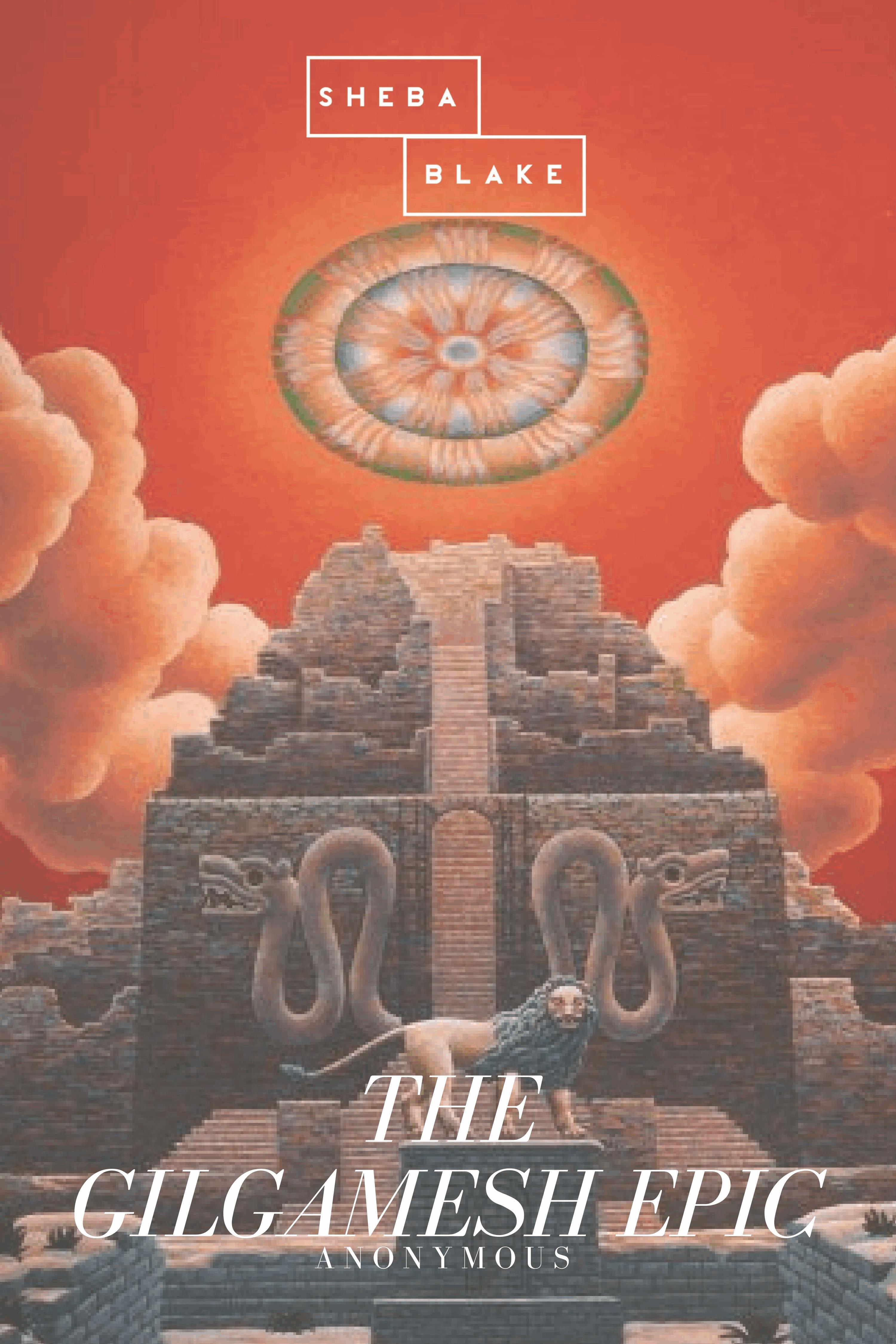
The Gilgamesh Epic is an epic poem from ancient Mesopotamia that is often regarded as the earliest surviving great work of literature. The literary history of Gilgamesh begins with five Sumerian poems about 'Bilgamesh' (Sumerian for 'Gilgamesh'), king of Uruk, dating from the Third Dynasty of Ur (circa 2100 BC). These independent stories were later used as source material for a combined epic. The first surviving version of this combined epic, known as the "Old Babylonian" version, dates to the 18th century BC and is titled after its incipit, Shūtur eli sharrī ("Surpassing All Other Kings"). Only a few tablets of it have survived. The later "Standard" version dates from the 13th to the 10th centuries BC and bears the incipit Sha naqba īmuru ("He who Saw the Deep", in modern terms: "He who Sees the Unknown"). Approximately two thirds of this longer, twelve-tablet version have been recovered. Some of the best copies were discovered in the library ruins of the 7th-century BC Assyrian king Ashurbanipal. The first half of the story discusses Gilgamesh, king of Uruk, and Enkidu, a wild man created by the gods to stop Gilgamesh from oppressing the people of Uruk. After an initial fight, Gilgamesh and Enkidu become close friends. Together, they journey to the Cedar Mountain and defeat Humbaba, its monstrous guardian. Later they kill the Bull of Heaven, which the goddess Ishtar sends to punish Gilgamesh for spurning her advances. As a punishment for these actions, the gods sentence Enkidu to death. In the second half of the epic, distress about Enkidu's death causes Gilgamesh to undertake a long and perilous journey to discover the secret of eternal life. He eventually learns that "Life, which you look for, you will never find. For when the gods created man, they let death be his share, and life withheld in their own hands".
Ta pozycja jest dostępna przez Internet. Rozwiń informację, by zobaczyć szczegóły.
Dostęp do treści elektronicznej wymaga posiadania kodu dostępu, który można odebrać w bibliotece.
E-book
W koszyku
Forma i typ
The Quran is the central religious text of Islam, which Muslims believe to be a revelation from God (Allah). It is widely regarded as the finest work in classical Arabic literature. The Quran is divided into chapters (surah in Arabic), which are then divided into verses (ayah). Muslims believe that the Quran was verbally revealed by God to Muhammad through the angel Gabriel (Jibril), gradually over a period of approximately 23 years, beginning on 22 December 609 CE, when Muhammad was 40, and concluding in 632, the year of his death. Muslims regard the Quran as the most important miracle of Muhammad, a proof of his prophethood, and the culmination of a series of divine messages that started with the messages revealed to Adam and ended with Muhammad. The word "Quran" occurs some 70 times in the text of the Quran, although different names and words are also said to be references to the Quran. According to the traditional narrative, several companions of Muhammad served as scribes and were responsible for writing down the revelations. Shortly after Muhammad's death, the Quran was compiled by his companions who wrote down and memorized parts of it. These codices had differences that motivated the Caliph Uthman to establish a standard version now known as Uthman's codex, which is generally considered the archetype of the Quran known today. There are, however, variant readings, with mostly minor differences in meaning. The Quran assumes familiarity with major narratives recounted in the Biblical scriptures. It summarizes some, dwells at length on others and, in some cases, presents alternative accounts and interpretations of events. The Quran describes itself as a book of guidance. It sometimes offers detailed accounts of specific historical events, and it often emphasizes the moral significance of an event over its narrative sequence. The Quran is used along with the hadith to interpret sharia law. During prayers, the Quran is recited only in Arabic.
Ta pozycja jest dostępna przez Internet. Rozwiń informację, by zobaczyć szczegóły.
Dostęp do treści elektronicznej wymaga posiadania kodu dostępu, który można odebrać w bibliotece.
Pozycja została dodana do koszyka. Jeśli nie wiesz, do czego służy koszyk, kliknij tutaj, aby poznać szczegóły.
Nie pokazuj tego więcej